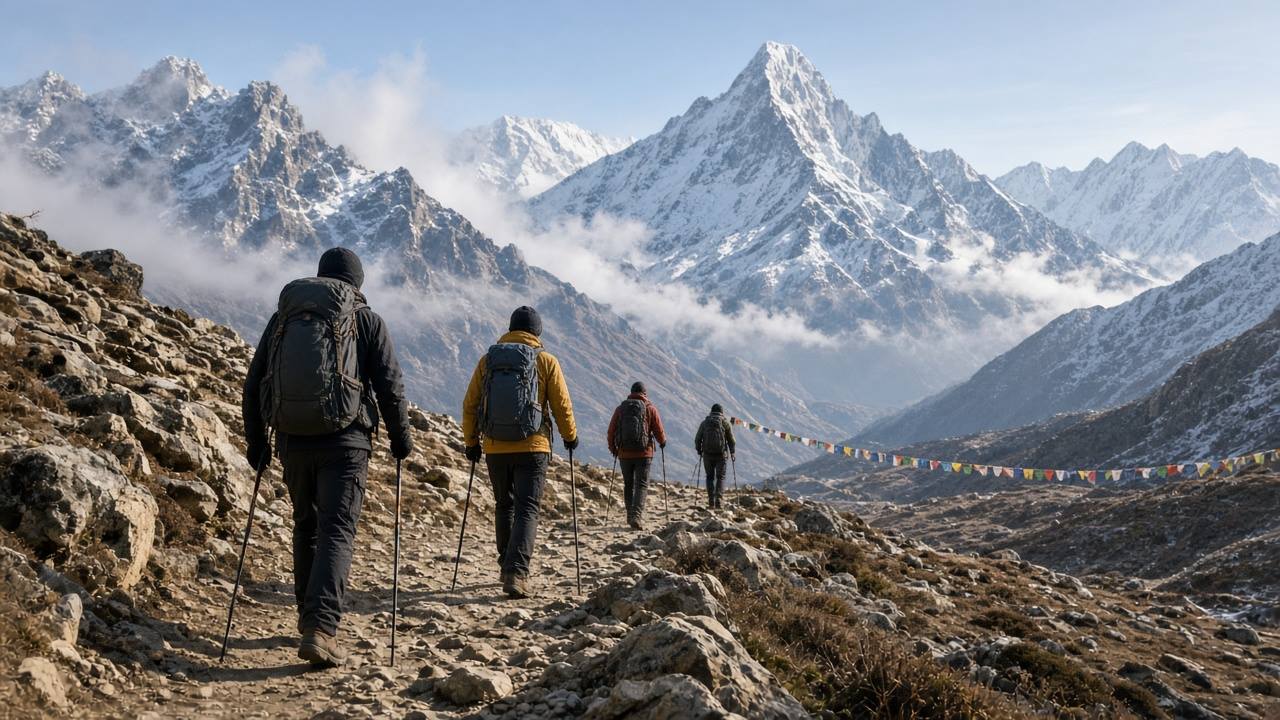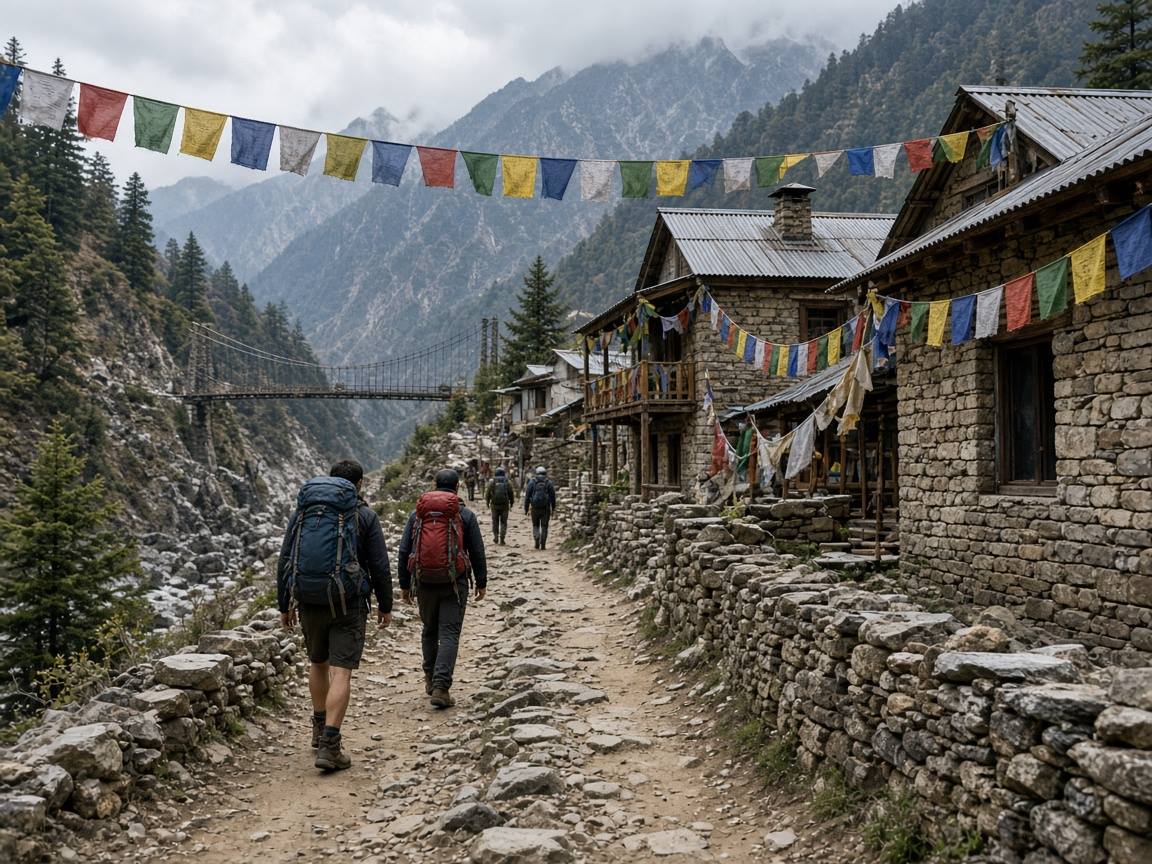
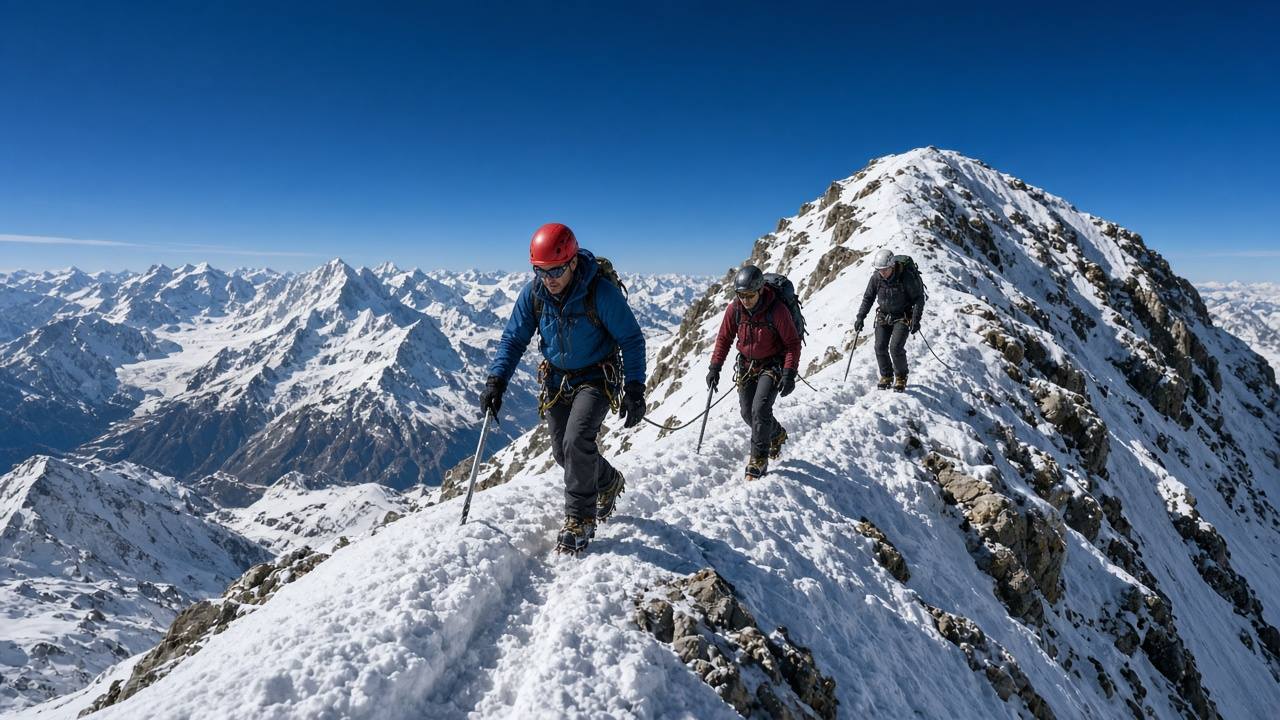
Peak climbing above 6,000 m is not a weekend trek — preparation and specialised cover decide how emergencies end.
Thinking about climbing Lobuche, Mera, or Island Peak? These routes sit in a different category from classic trekking. Steeper terrain, objective hazard, and longer evacuation chains change what “prepared” really means.
What makes these peaks different
Lobuche East, Mera Peak, and Island Peak ask for glacier travel skills, acclimatisation discipline, and clear turnaround rules. Weather windows close quickly. A delayed descent can become a medical or rescue event before you expect it.
Preparation that actually matters
- Build altitude progressively — don’t jump straight into a summit push.
- Confirm rope, crampon, and fixed-line comfort before you book.
- Know your operator’s evacuation plan and who coordinates helicopter bids.
- Carry a cover that includes high-altitude climbing and cashless rescue where available.
Safety essentials on summit day
Watch for AMS signs early. Agree turnaround times with your guide. Keep communication devices charged. If someone deteriorates, treat evacuation as a medical priority — not a last resort after “one more try.”
How ASC360 fits the picture
ASC360 specialises in adventure and high-altitude cover with on-ground coordination in Nepal. For peak climbs, that usually means matching altitude limits, evacuation logistics, and 24/7 assistance to the route you are actually doing.
This prototype expands the ASC360 blog listing summary for design review. Read the full published story on asc360.com.